Logistics Service Application

Digitizing Logistic Management

COMPANY

Zetwerk

ROLE

Lead Designer

Tools Used

Figma, Miro

Project name

ZHIP

Project description

Project description

Project description

Zetwerk released “ZHIP” for easy tracking of domestic shipments to fortify a resilient supply chain. The domestic goods and shipment tracking of goods was made easy by integrating a tracking API and getting live tracking of the shipments.

Timeline

From explorations to final designs in 8 weeks while working with multiple projects at the same time

About Zetwerk

Zetwerk is an India-based technology-driven manufacturing platform that serves as a connecting bridge between buyers and manufacturing suppliers, with a primary focus on the engineering and industrial sectors. Operating as an online marketplace, Zetwerk enables businesses to source & procure custom-made components and products from a vetted network of suppliers in bulk. In addition to facilitating connections, Zetwerk is involved in providing global supply chain solutions and actively participates in the manufacturing of goods as well.

Project Focus

This case study highlights challenges in Zetwerk's logistics, driven by manual processes. As business units grow, this affects the Global Supply Chain, leading to customer trust issues, deal cancellations, and revenue loss. Urgently, we proposed an automated overhaul using cutting-edge technology to optimize logistics, restore trust, and boost revenue. Transforming challenges into opportunities for a resilient logistics infrastructure at Zetwerk.

Design Process

Design Process

Design Process

This category details the step-by-step approach taken during the project, including research, planning, design, development, testing, and optimization phases.

Research & Planning

During the discovery phase, the goal was to understand project requirements, user needs, and existing logistics processes through in-depth user interviews. Insights from this research informed the creation of user personas, user flows, and information architecture, laying the foundation for a redesigned user experience and an interactive product.


USER RESEARCH : Link to user Research


After thorough user research, we were able to draw major user problems and propose their solutions:

1. Lack of real-time visibility into truck locations forces stakeholders to rely on frequent calls to drivers, leading to communication inefficiencies and operational delays.
Proposed Solution: Provide a Vahan API integration in the application which will validate the truck location whenever it passes a fast-track toll plaza.
2.Manually filling forms for each shipment is repetitive and prone to errors, making data management inefficient.
Proposed Solution: Provide forms by keeping relevant information in consideration and trying to pull most of the data by E-way Bill number, to reduce labor work and reduce human errors.
3. Customers lack real-time visibility into shipment arrival times, making it difficult to plan for unloading efficiently. This often leads to increased waiting times and higher operational costs.
Proposed Solution: Giving a real-time tracking link to the customer to know the location and arrival time of the shipment
4. Lack of a streamlined process for verifying driver documents and paperwork increases the risk of legal issues and non-compliance.
Proposed Solution: Use the Vahan API Data to validate the legal documents of the trucks.

During the discovery phase, the goal was to understand project requirements, user needs, and existing logistics processes through in-depth user interviews. Insights from this research informed the creation of user personas, user flows, and information architecture, laying the foundation for a redesigned user experience and an interactive product.


After thorough user research, we were able to draw major user problems and propose their solutions:

1. Real-time visibility of the location of the trucks, to eliminate the hassle of calling truck drivers for locations.
Proposed Solution: Provide a Vahan API integration in the application which will validate the truck location whenever it passes a fast-track toll plaza.
2. Creating every shipment separately on the platform by filling up relevant information on the form provided, to keep the data organized and easy to read.
Proposed Solution: Provide forms by keeping relevant information in consideration and trying to pull most of the data by E-way Bill number, to reduce labor work and reduce human errors.
3. Customers lack real-time visibility into shipment arrival times, making it difficult to plan for unloading efficiently. This often leads to increased waiting times and higher operational costs.
Proposed Solution: Giving a real-time tracking link to the customer to know the location and arrival time of the shipment
4. Legally verifying all the truck user's paperwork and driver details to reduce legal issues.
Proposed Solution: Use the Vahan API Data to validate the legal documents of the trucks.

Ideation (Finalised Design Goals)

  1. Reducing the incurring cost for Zetwerk

  2. Improving the shipment transparency for both supplier and customer.

  3. Minimise order cancellations due to unforeseen delays in goods shipments.

  4. An easier way to track the shipment data.

Designing

Extensive brainstorming sessions were conducted to explore numerous ideas for the initiative, involving active participation from project managers and relevant stakeholders. To visually present these ideas to stakeholders and users, paper sketches were created, which helped gather feedback. Based on this feedback, subsequent iterations were made and ultimately the final versions were finalized.

Testing & Optimization

Conducted rigorous testing across various devices and platforms to ensure compatibility and performance. Gathered user feedback through beta testing and iteratively optimized the app based on usability metrics and user satisfaction.

Solution

Solution

Solution

The resulting Logistics application offers a seamless user experience, allowing individual client and Zetwerk to effortlessly manage their incoming and outgoing Shipments.

Shipment tracking

Active shipments were digitally tracked through Fastag Vahan API integration, eliminating the need to rely on phone calls with fleet drivers for location updates.

Vehicle legality check

Vehicles were legally verified using their registration numbers through Vahan API integration, significantly reducing instances of legal detainment and saving Zetwerk substantial costs associated with vehicle release and delayed shipments.

Shipment Documentation

Data entry through the platform minimized human errors commonly associated with maintaining Excel sheets and manual inputs.

Final Design Screens

Final Design Screens

Final Design Screens

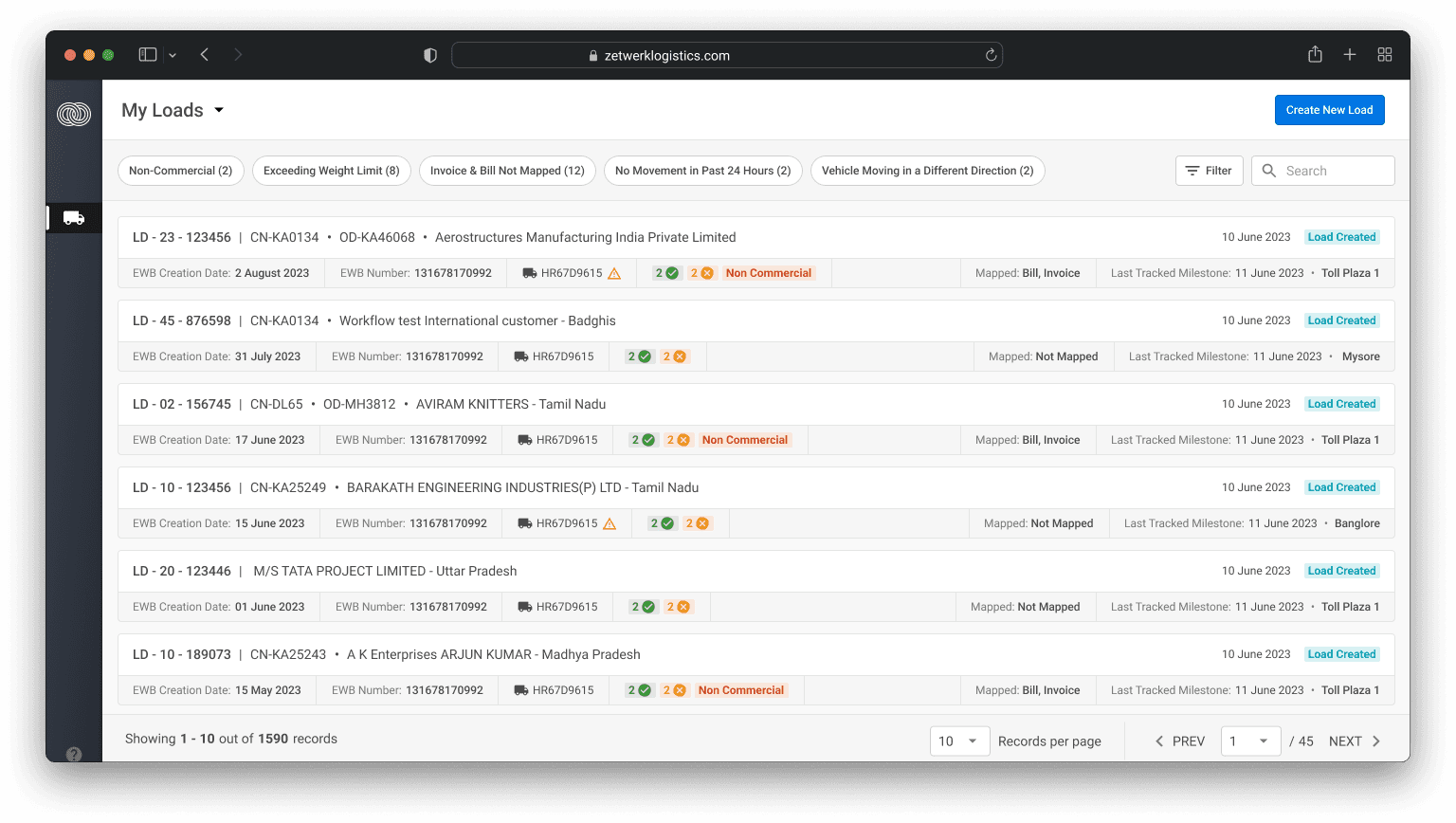
Landing Screen: This screen represents the complete loads list, along with the filters to make the load search easy for user.
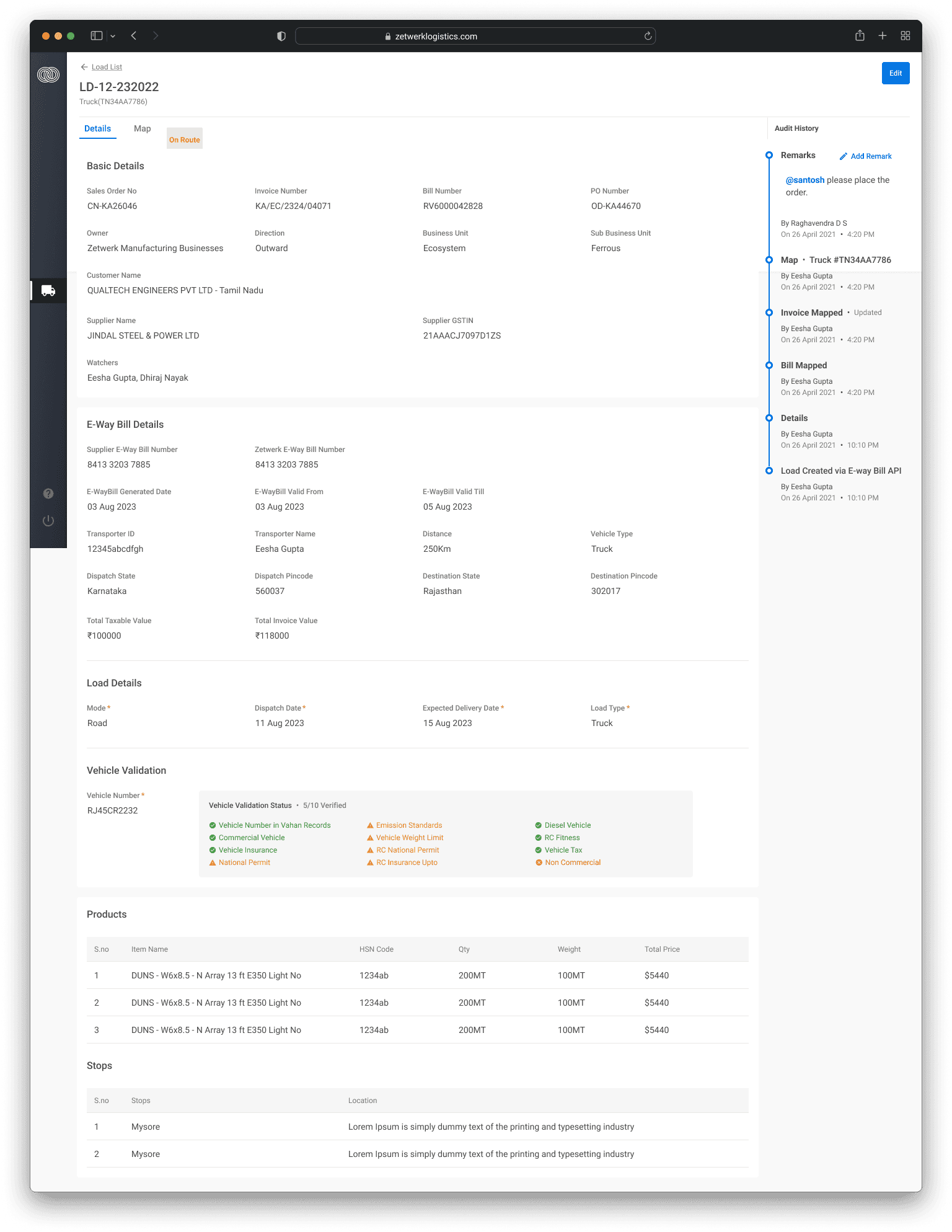
Details Screen: This screen represents the details section, where the user inputs data for the load tracking.
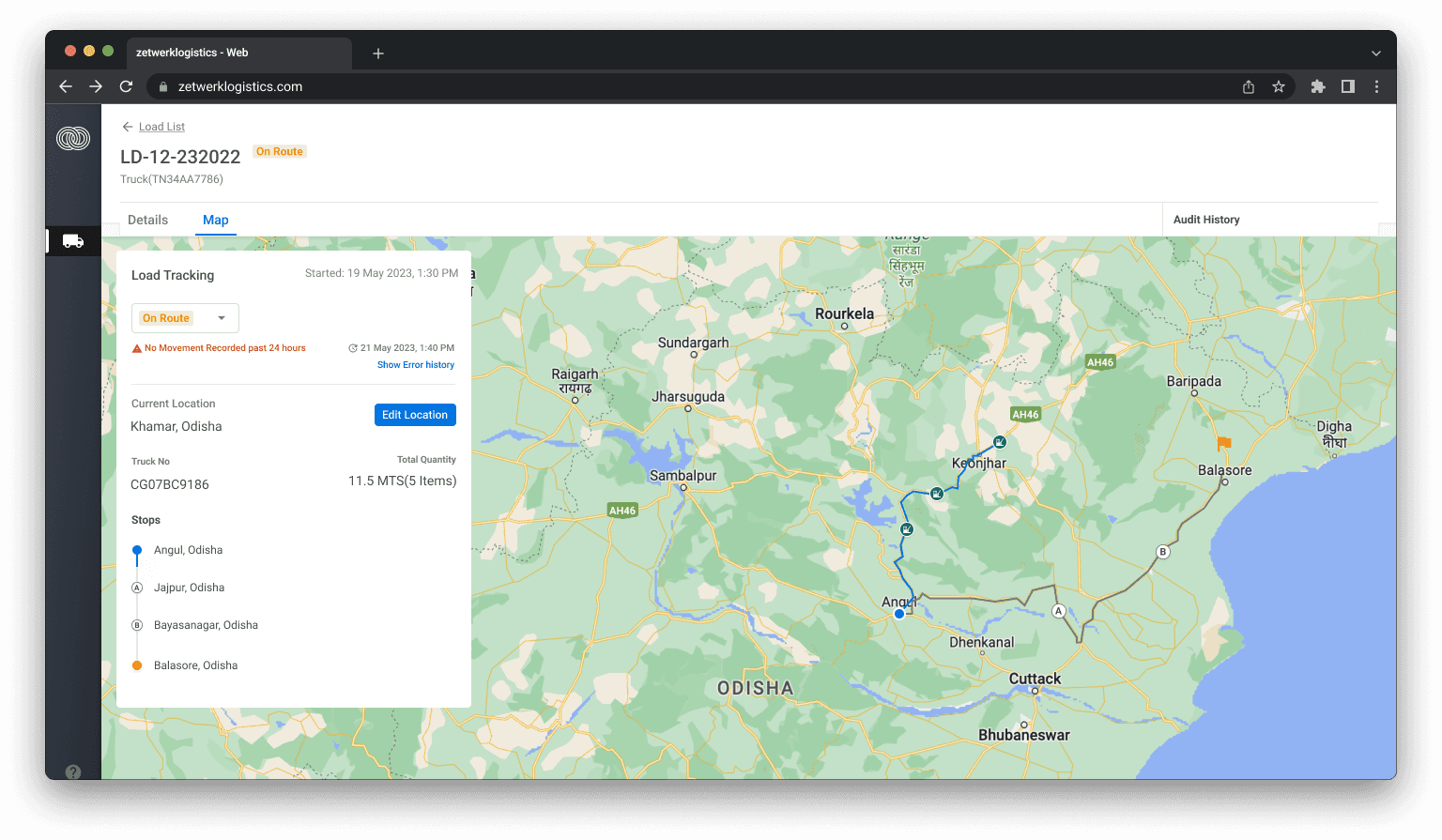
Map Screen: This screen represents the map view, where the user can track the location of the load, and manually change the location and status of the shipment.

Results

Results

Results

Upon the completion of product development, the success of the initiative was assessed.

Increased Efficiency

1) Delays

Before:
20% average dispatch delays per month due to lack of timely customer updates.

After:
Dispatch delays reduced to 12% per month, thanks to timely updates for customers and internal teams.


2) Productivity

Before:
15–20 calls per month per sales user (10 minutes each) to follow up on dispatch inquiries.

After:
Reduced to fewer than 10 calls per month per user, saving 200+ minutes per supply operations user through real-time updates.

1) Delays

Before:
20% average dispatch delays per month due to lack of timely customer updates.

After:
Dispatch delays reduced to 12% per month, thanks to timely updates for customers and internal teams.


2) Productivity

Before:
15–20 calls per month per sales user (10 minutes each) to follow up on dispatch inquiries.

After:
Reduced to fewer than 10 calls per month per user, saving 200+ minutes per supply operations user through real-time updates.

Compliance Improvements

Before:
250–300 vehicles with compliance issues found during random quarterly audits.

After:
400 vehicles flagged for compliance issues and proactively notified to suppliers and transport partners in the first month of rollout.

Reduction in Order Cancellations

Before:
Zetwerk lost over 15 orders and associated customers each month, as reported through user interviews.

After:
With approximately 80 customers using the platform monthly to track shipments and loads, order cancellations dropped significantly to just 6 per month. Improved shipment visibility led to better clarity and reduced customer drop-offs.

Follow me on other channels

Medium/@eeshagupta5

Behance

Follow me on other channels

Medium/@eeshagupta5

Behance

Follow me on other channels

Medium/@eeshagupta5

Behance

Create a free website with Framer, the website builder loved by startups, designers and agencies.